

Does Equity Keep People Engaged After an Acquisition?
Equity can give key employees a financial reason to stay after an acquisition. But retention and engagement are not the same thing. What happens when someone remains with the firm but stops investing in its future?

Two Decisions, Two Timelines: Pricing and Rate Alignment After an Acquisition
Aligning rates after an acquisition looks like a finance problem, but the real challenge is managing two different timelines: what clients can be charged and how quickly internal compensation and billing structures need to change.
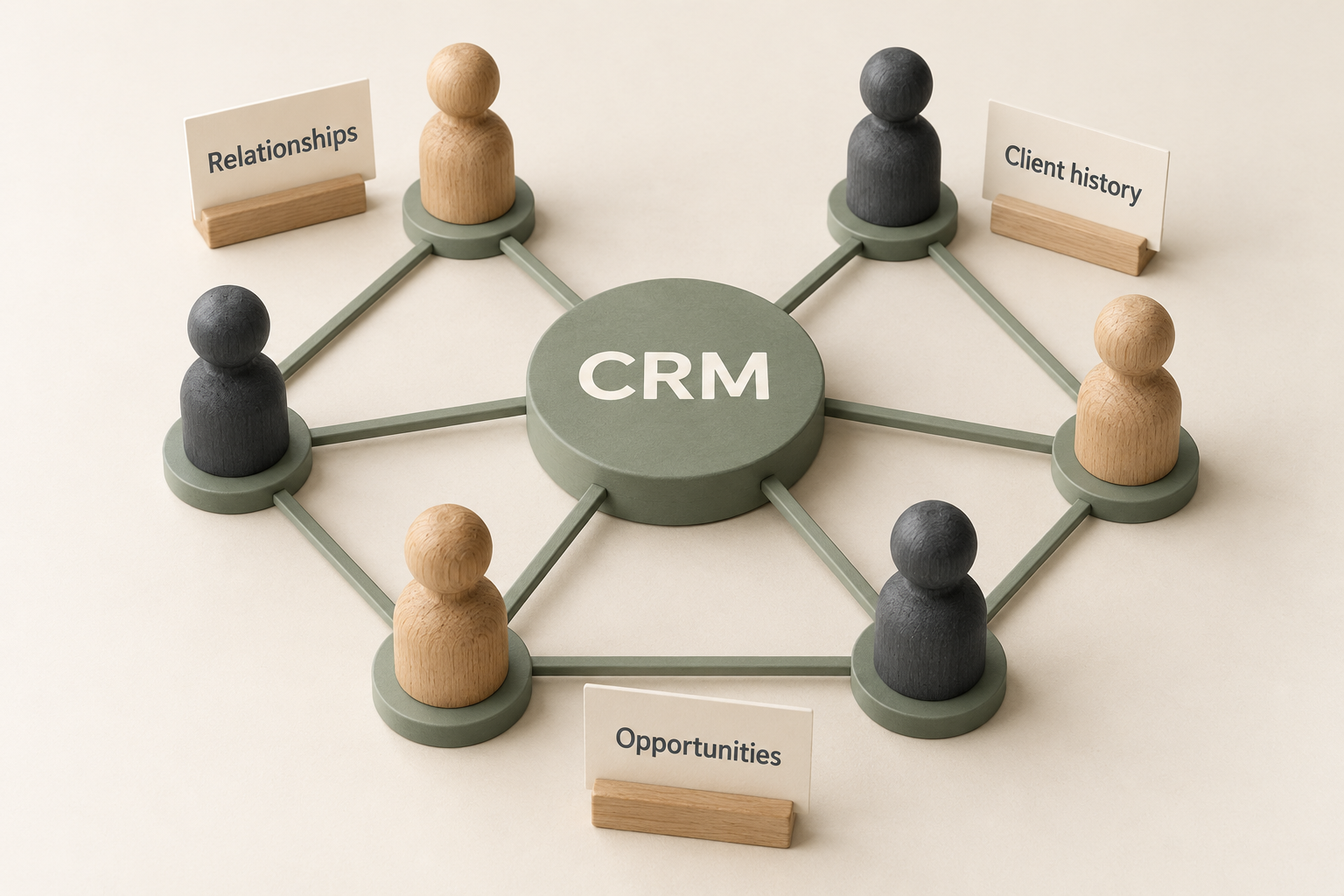
Your CRM Is Probably Your Most Underutilized Business Asset
For environmental consulting firms, CRM should do more than track sales opportunities. Used well, it can expose client concentration risk, protect institutional relationships, and make critical account knowledge less dependent on individual employees.

Structure by Default or by Design: Three Organizational Models for Environmental Consulting Acquisitions
Acquirers often extend their existing organizational structure over a newly acquired firm. That can work, but not when the acquired company’s clients, technical reputation, or operating model depend on something the existing structure was never designed to protect.

The Client Communication Decision in M&A: Sequence Over Message
Client communication after an acquisition is not just about crafting the right announcement. Who delivers the message, when the client hears it, and what happens before the news reaches the market can matter even more.

Why the Best People Leave First After an Acquisition, and What to Do About It
The people carrying the strongest client relationships and technical knowledge are often the employees with the most options after an acquisition. Retaining them requires more than an HR plan, and the work starts before close.

The Brand Decision: Whose Name Goes on the Door, and When Does the Old One Come Down?
In environmental consulting, a company name can carry years of client trust, technical reputation, and regulatory credibility. That makes post-acquisition branding much more than a marketing decision.

What Due Diligence Cannot See
Financial and operational diligence can tell an acquirer a great deal about a business. It is much harder to capture what employees believe makes their firm valuable, what they fear losing, and how those expectations will shape integration.

Seven Decisions That Make or Break an Environmental Firm Acquisition
The value of an acquisition is rarely won or lost on the financial model alone. Seven operational, cultural, and strategic decisions shape what happens after close, and the order in which firms make them matters.

The Acquisition Playbook: Why Specialty Firms Get Bought and Generalists Get Left Behind
Buyer interest in environmental consulting has shifted. Specialty firms are increasingly attractive because they offer something harder to replicate than scale alone, changing how owners should think about positioning whether or not a sale is on the horizon.

Culture isn’t a Perk, It’s a Strategy
Environmental consulting firms have plenty of work. The harder challenge is attracting and retaining the people needed to deliver it. In a talent-constrained industry, culture increasingly affects growth, client continuity, and competitive advantage.

The Danger of Being Full-Service in Environmental Consulting
Being able to do many things is not the same as being known for something. Firms that try to be everything to everyone can dilute their positioning and make it harder for clients to understand why they should choose them.

Why Cross-Selling Is So Difficult in Environmental Consulting Firms
Cross-selling sounds simple when a firm already has trusted client relationships and multiple services to offer. In practice, organizational silos, unclear value, and disconnected teams often make it much harder than leaders expect.

Why Environmental Consulting Firms Struggle to Articulate Their Value
Environmental firms are filled with strong technical expertise, yet many describe themselves in nearly identical ways. The challenge is not creating more marketing language. It is getting clearer about what genuinely differentiates the business.

An Introduction to Ascend Strategy Co.
Ascend grew from years of seeing the same challenges across environmental consulting firms: excellent technical work paired with unclear positioning, disconnected growth efforts, and opportunities that were difficult to translate into strategy.